A Mathematician Says Claude AI Helped Solve the Most Famous Problem in Mathematics. If True, It's Historic
A mathematician at Anthropic claims that he and its Claude AI have proved the Riemann Hypothesis, but the claim is not yet independently verified.
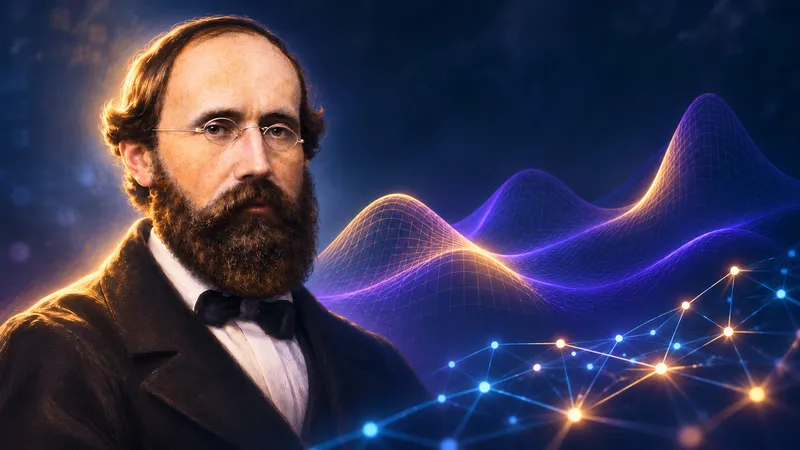
The Riemann Hypothesis, proposed by 1859 German mathematician Bernhard Riemann, concerns where the zeros of the Riemann zeta function lie and how precisely they describe the distribution of prime numbers. Its proof carries a $1 million Clay Millennium Prize, and it has resisted mathematicians for 167 years. Levent Alpöge says that, working with Claude, he found a proof of a generalized version of the hypothesis, which would settle numerous results that mathematicians have so far established only by assuming it is true.
Alpöge did not say which Claude version he used, though Anthropic has previously used unreleased research versions with dozens of cooperating AI agents for mathematical work. In August, Anthropic reported that Claude had raised the proven share of zeros on Riemann's line from 41.6% to 67.2%. Alpöge says the key breakthroughs came in mid-November, with the generalized result reached on November 16.
Alpöge has not published a conventional paper. Instead, he released the proof as code in the Lean system, which checks logic mechanically. Lean does not confirm that the code defines the intended statement, so other mathematicians must verify that before the problem can be declared solved.
Why it matters
If confirmed, the result would be one of the biggest mathematical breakthroughs in generations and a sign of AI's growing ability to make major scientific discoveries.