Why Are These Polar Bears Thriving?
Polar bears at the southern edge of their range in James Bay appear to be thriving, a puzzle for scientists given rapidly shrinking sea ice.
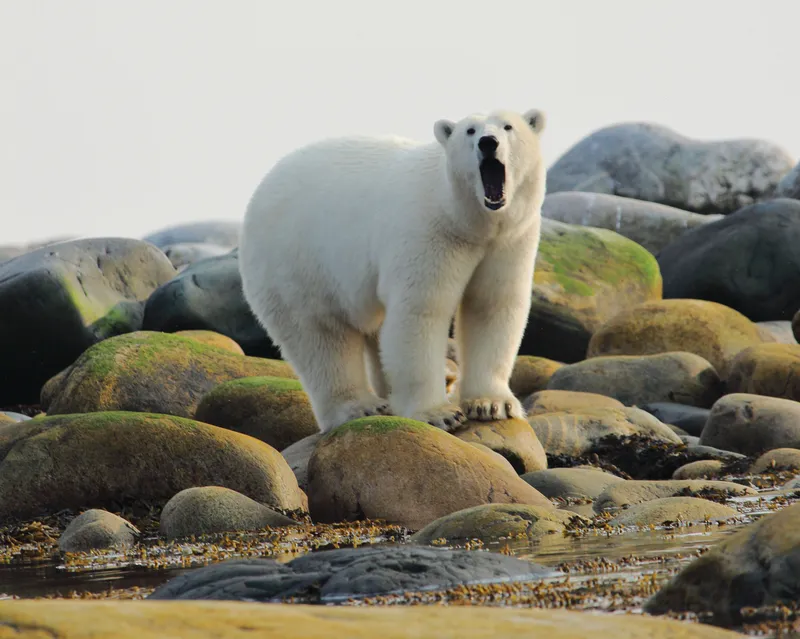
A research partnership since 2021 pairs Cree trappers from Waskaganish with scientists led by Alexandra Langwieder of McGill University. They use barbed-wire hair snares and camera traps that collect fur for genetic and diet analysis, avoiding the helicopter darting and radio collaring once common in polar bear research. The project has catalogued 94 individual bears across the Eeyou Marine Region, split evenly between males and females. Nearly 80 percent of photographed bears scored as "average" or "visibly fat" on a five-point fatness index.
Researchers caution that early-summer fat stores cannot protect bears from severe late-season food shortages. The wider Southern Hudson Bay subpopulation fell by 17 percent between 2011 and 2016 as its ice-free season lengthened. Gregory Thiemann of York University stresses that polar bears need sea ice, and that the region has recorded 175 to 180 ice-free days in several years, close to the roughly 180-day threshold for adult survival.
Local observations suggest the bears hunt seals from shorelines and scavenge belugas, caribou and birds. Langwieder's preliminary hair analysis indicates the bears are feeding mainly on marine prey, and she plans to submit the results for publication. Cree trappers aim to prevent conflict with bears that come ashore, especially during the spring goose hunt, and said the last bear they killed was in 2018. Thiemann says the outlook is not positive but that the partnership could help predict and reduce conflicts.
Why it matters
The James Bay bears test whether polar bears can adapt to shore-based feeding, a question that bears on conservation and on reducing conflicts with coastal communities. Scientists warn that any apparent resilience may be temporary as sea ice keeps shrinking.